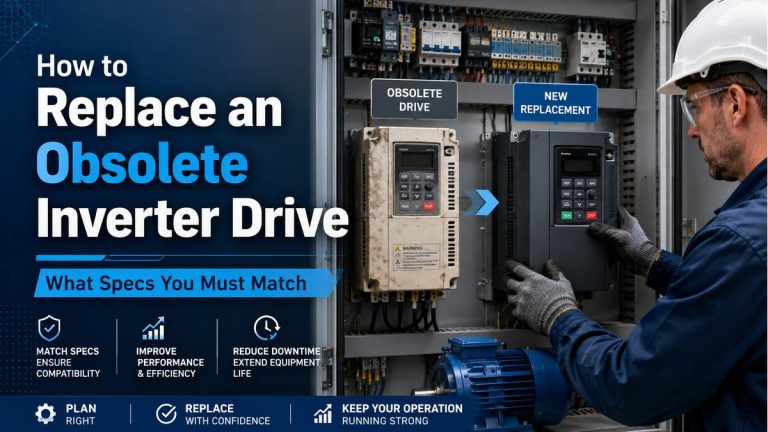

VFDs for Pumps: Constant Pressure, PID Control & Energy Optimisation Explained
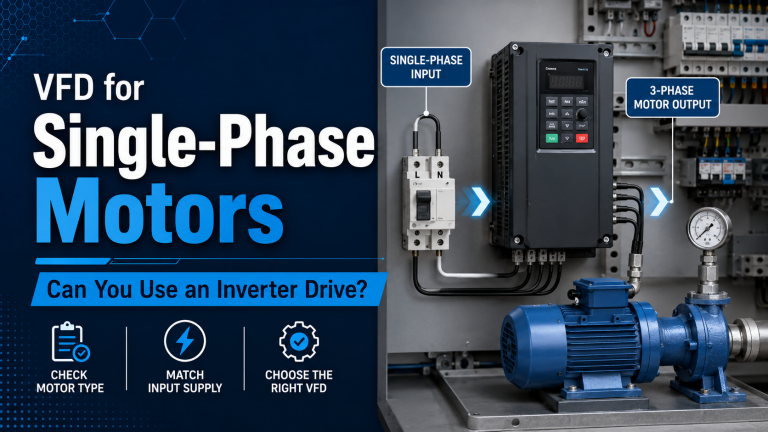
Variable Frequency Drives (VFDs) are one of the most effective ways to improve pump system efficiency, reliability, and control. Instead of running pumps at full speed continuously and throttling flow with valves, a VFD adjusts motor speed to match demand.
This reduces energy consumption, minimises mechanical stress, and allows precise pressure control. In fact, many modern pumping systems cannot meet efficiency targets without a properly sized inverter drive (VFD).
In this guide, we explain how VFDs enable constant pressure control, how PID loops work, and how to optimise your pump motors and mechanical systems for maximum energy savings.
Why Use a VFD on a Pump?
Traditional pump systems often use fixed-speed motors with throttling valves or bypass lines to control flow. This wastes energy because the motor still runs at full speed.
Using a VFD allows you to:
- Control flow electronically
- Maintain constant pressure automatically
- Soft start and stop
- Reduce energy consumption
- Minimise pipe and valve wear
For most systems, a VFD upgrade quickly pays for itself through lower electricity bills.
How Pump Speed Affects Energy Use (Affinity Laws Explained)
Centrifugal pumps follow the affinity laws:
- Flow ∝ Speed
- Pressure ∝ Speed²
- Power ∝ Speed³
This means even small speed reductions deliver large energy savings.
Example:
- 100% speed = 100% power
- 80% speed ≈ 50% power
- 70% speed ≈ 35% power
Reducing speed slightly can cut energy use dramatically — something impossible with fixed-speed motors.
Constant Pressure Control with VFDs
Many pumping applications require stable pressure rather than constant speed.
Typical Applications
- Booster pumps
- Water supply systems
- Irrigation
- HVAC circulation
- Process water
A VFD automatically adjusts motor speed to maintain the target pressure.
When demand drops:
- Speed reduces
- Energy use drops
- Pressure stays constant
This provides smoother operation and lower costs compared to on/off control.
What Is PID Control?
PID (Proportional–Integral–Derivative) control is built into most modern VFDs.
It allows the drive to automatically regulate speed using feedback from a sensor.
How It Works
- Pressure sensor measures system pressure
- Signal sent to the VFD
- Drive increases or decreases speed to maintain setpoint
This creates a closed-loop system that constantly adjusts to demand changes.
Benefits of PID Pump Control
- Stable pressure
- Reduced water hammer
- Lower energy use
- Less mechanical wear
- Quieter operation
- Extended pump and motor life
For most variable flow systems, PID control is the most efficient solution.
Soft Starting & Mechanical Protection
Direct-on-line (DOL) starts create sudden torque and pressure spikes that stress:
- Pipes
- Valves
- Seals
- Bearings
VFD soft starting gradually increases speed, preventing:
- Water hammer
- Pipe shock
- Seal damage
This significantly increases system reliability.
Choosing the Right VFD for a Pump
1. Identify Load Type
Centrifugal pumps are variable torque loads, meaning torque decreases at lower speeds. This allows the use of normal-duty rated drives.
2. Match Motor Current
Always size the drive by motor current, not just kW.
3. Use Inverter-Rated Motors
Select reliable AC motors suitable for variable speed operation.
4. Consider Gear Reduction (If Required)
In some low-speed/high-torque applications, a gearbox or geared motor may improve efficiency.
5. Check IP Rating
Outdoor or washdown environments may require higher enclosure protection.
Real-World Example
Application: Building water booster pump
Motor: 7.5 kW
Problem: Pressure fluctuations and high energy use
Solution:
- Install 7.5 kW VFD with PID control
- Add pressure sensor feedback
- Set constant pressure mode
Result:
- Stable pressure
- ~40% energy reduction
- Lower maintenance
Common Pump Drive Mistakes
- Running full speed and throttling valves
- Using constant torque settings for pumps
- Oversizing motors unnecessarily
- Ignoring PID setup
- Not using soft starts
Frequently Asked Questions
Are pumps constant or variable torque loads?
Centrifugal pumps are variable torque loads.
Do I need a heavy-duty VFD for a pump?
Usually not. Normal-duty drives are typically sufficient.
How much energy can a VFD save?
Often 20–60%, depending on operating conditions.
Do I need a pressure sensor?
Yes, for closed-loop PID control.
Will a VFD extend pump life?
Yes. Soft starts and speed control reduce mechanical stress.
Need Help Choosing a Pump Drive?
At Drive Outlet Megastore, we supply reliable inverter drives, electric motors, geared motors, and drive solutions for pump and water systems.
If you’re upgrading or designing a pump installation, contact our team and we’ll help you select the most efficient and reliable solution first time.