
Using VFDs in Conveyor Systems: Speed Control, Torque Limiting & Load Sharing Explained
Conveyor systems are one of the most common applications for Variable Frequency Drives (VFDs). Whether moving products in a warehouse, factory, or processing plant, conveyors require smooth starts, controlled speeds, and reliable torque handling.
Using the correct inverter drive (VFD) with properly sized electric motors, geared motors, or gearboxes dramatically improves efficiency, reduces wear, and increases system reliability.
In this guide, we explain how VFDs improve conveyor performance through speed control, torque limiting, and load sharing — plus how to size your system correctly.
Why Use a VFD on a Conveyor?
Traditional conveyor systems often run at fixed speed using direct-on-line (DOL) starters. This causes harsh starts, high mechanical stress, and unnecessary energy use.
A VFD allows you to:
- Soft start and stop
- Adjust speed precisely
- Limit torque to protect mechanics
- Synchronise multiple conveyors
- Reduce energy consumption
This results in smoother operation and longer component life.
1. Speed Control in Conveyor Systems
Speed control is the most common reason for installing a VFD on a conveyor.
Benefits of Variable Speed
- Match line speed to production demand
- Reduce bottlenecks
- Gentle product handling
- Lower energy use at partial load
Instead of mechanical gearing changes, operators can adjust speed electronically through the drive.
For most systems, pairing a VFD with a geared motor gives the best combination of torque and control.
2. Soft Starting & Stopping (Mechanical Protection)
Direct starting can produce 6–8× rated motor current and sudden torque shocks. This stresses:
- Belts
- Chains
- Bearings
- Gearboxes
VFD ramp control gradually increases speed, reducing shock loading and extending the life of both motors and gearboxes.
3. Torque Limiting (Overload Protection)
Conveyors often jam or overload due to product buildup or mechanical blockage. Without protection, this can damage belts, couplings, or gears.
Modern VFDs include torque limiting features that:
- Cap maximum torque
- Prevent mechanical damage
- Trip safely during jams
- Reduce maintenance costs
Torque limiting is especially useful for long or heavily loaded conveyors.
4. Load Sharing Between Multiple Motors
Large conveyor systems often use multiple motors driving the same belt.
Without proper control:
- One motor may take most of the load
- Overheating occurs
- Uneven wear develops
Using multiple VFDs with speed or torque sharing allows motors to:
- Balance load automatically
- Improve efficiency
- Increase reliability
- Prevent premature failure
5. Energy Savings with VFDs
Running conveyors at full speed continuously wastes energy.
Reducing speed when demand is lower:
- Reduces power consumption
- Lowers operating costs
- Improves sustainability
Even small speed reductions can produce significant energy savings over time.
Choosing the Right VFD for a Conveyor
Step 1 – Identify Load Type
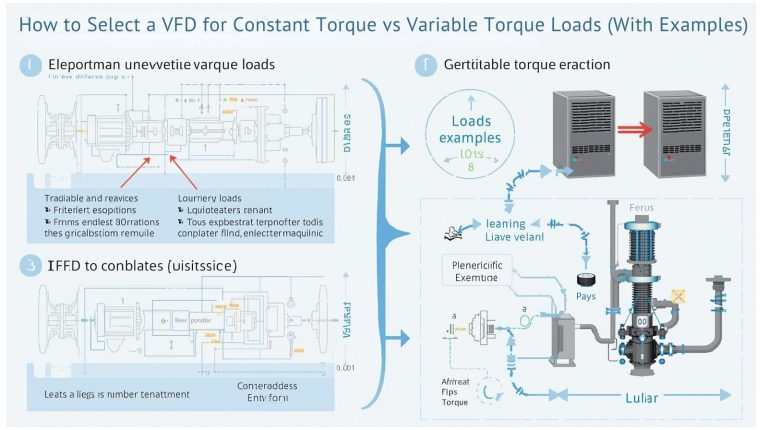
Conveyors are typically constant torque loads, meaning the drive must deliver full torque at low speed.
Select a heavy-duty rated constant torque VFD.
Step 2 – Check Overload Rating
- Look for 150% overload capability
- Important for startup under load
Step 3 – Size the Motor Correctly
Choose an appropriately sized motor or geared motor with sufficient torque margin.
Step 4 – Consider Gear Reduction
Using a gearbox allows the motor to run near base speed while delivering higher torque efficiently.
Real-World Example
Application: Warehouse conveyor
Motor: 4 kW geared motor
Requirement: Adjustable speeds and smooth starts
Solution:
- 4 kW heavy-duty VFD
- 5-second acceleration ramp
- Torque limit enabled
Result: Reduced belt wear, quieter operation, and fewer mechanical failures.
Common Conveyor Drive Mistakes
- Using normal-duty drives for constant torque loads
- Starting fully loaded conveyors without ramps
- Ignoring torque limiting
- Not synchronising multiple drives
- Oversizing motors instead of using gear reduction
Frequently Asked Questions
Do all conveyors need a VFD?
Not always, but VFDs greatly improve control, reliability, and efficiency.
Are conveyors constant or variable torque?
Most are constant torque loads and require heavy-duty drives.
Can one VFD run multiple motors?
Yes, in some cases, but separate drives often give better load sharing.
Does a gearbox reduce stress on the drive?
Yes. Gear reduction lowers required motor torque and improves efficiency.
Will a VFD extend conveyor life?
Yes. Soft starts and torque control reduce mechanical shock and wear.
Need Help Selecting a Conveyor Drive System?
At Drive Outlet Megastore, we supply reliable inverter drives, electric motors, geared motors, and gearboxes for conveyor and materials handling applications.
If you’re unsure which drive or motor size you need, contact our team and we’ll help you select the right solution for smooth, efficient operation.