How Encoders Work with VFDs – Closed Loop Speed & Position Control
In modern industrial automation, achieving precise motor control is critical for performance, efficiency, and reliability. While standard VFD (variable frequency drive) systems can control motor speed effectively, adding an encoder takes control to the next level by enabling closed loop speed and position control.
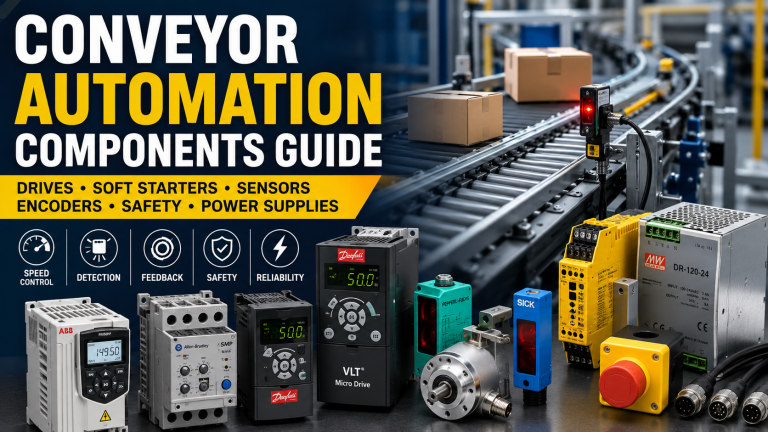
This guide explains how encoders work with VFDs, the difference between open loop and closed loop control, and when encoder feedback is essential for your application. If you are selecting components, you can also explore our ranges of encoders, inverter drives, and advanced Allen Bradley drives including the PowerFlex 753 series.
What Is an Encoder?
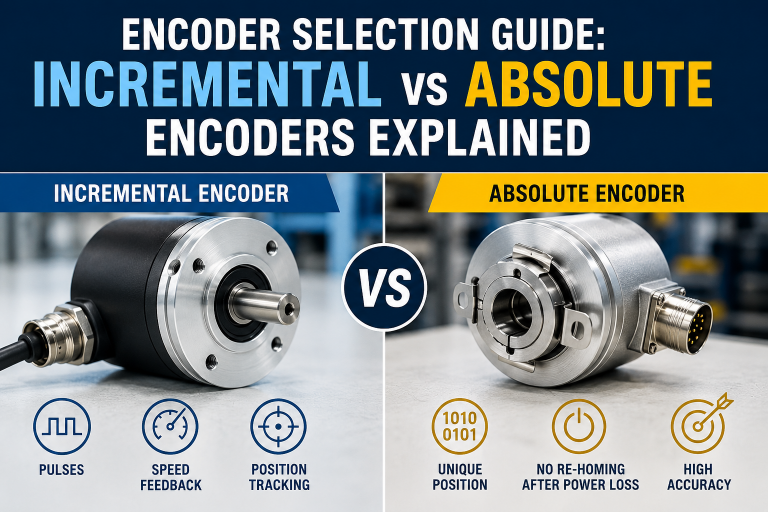
An encoder is a feedback device that converts mechanical motion into an electrical signal. It is typically mounted on a motor shaft or driven load and provides real-time information about:
- Speed
- Position
- Direction of rotation
Encoders generate pulses as the shaft rotates, and the frequency of these pulses is directly related to speed. This allows the control system to monitor motor performance in real time :contentReference[oaicite:0]{index=0}.
In VFD systems, this feedback is sent back to the drive to enable precise control of motor operation.
Open Loop vs Closed Loop VFD Control
Open Loop Control
In a standard VFD setup, the drive controls motor speed by adjusting frequency and voltage, but it does not receive feedback from the motor.
This means the drive assumes the motor is running at the commanded speed, even if load changes or slip occurs.
Closed Loop Control
With an encoder installed, the system becomes a closed loop control system. The VFD continuously receives feedback from the encoder and compares the actual motor speed or position to the desired value.
The drive then adjusts its output in real time to correct any deviation, ensuring accurate and stable operation :contentReference[oaicite:1]{index=1}.
How Encoders Work with VFDs
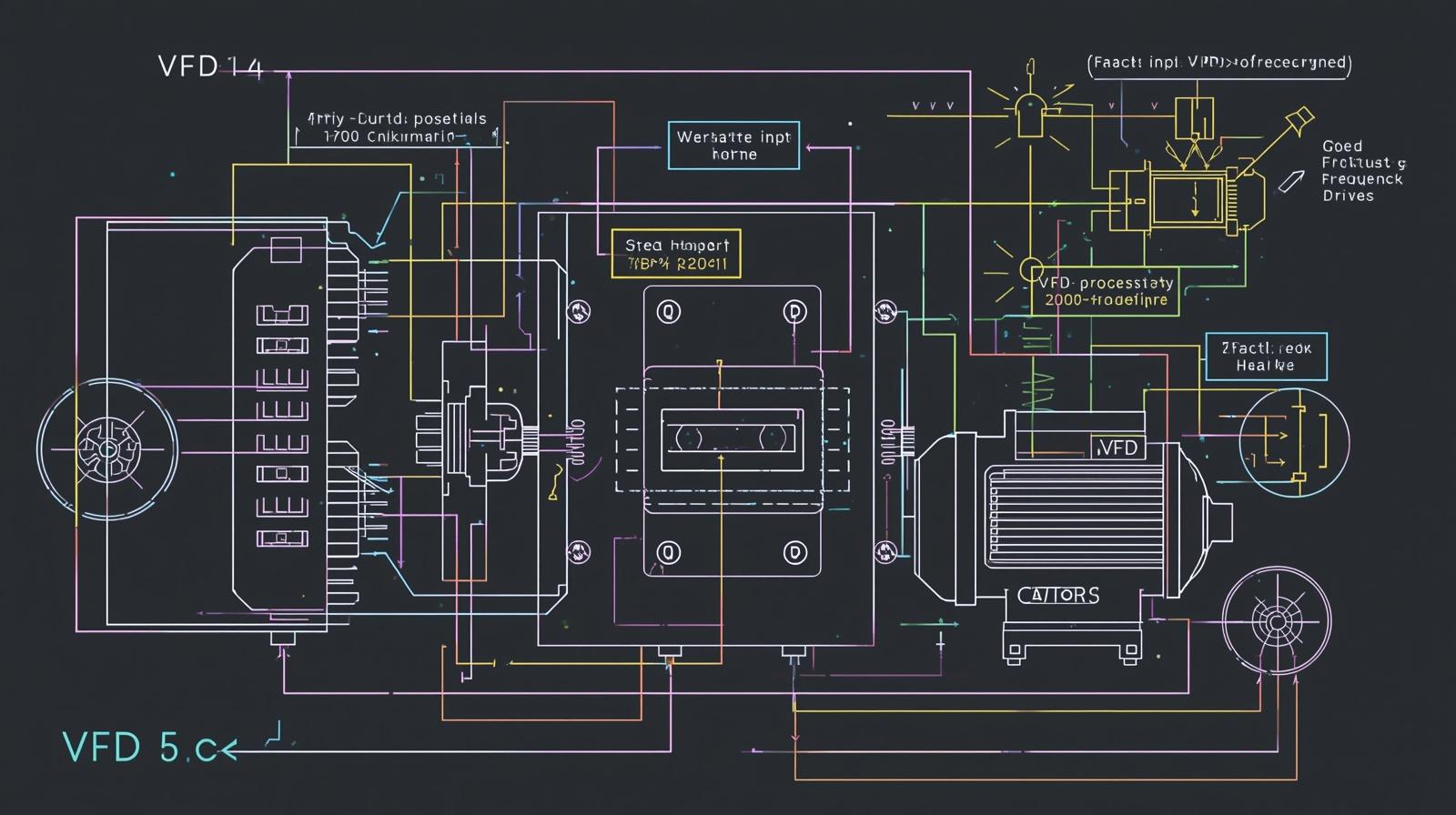
When an encoder is integrated into a VFD system, it forms part of a feedback loop:
- The VFD sends power to the motor
- The motor rotates and drives the encoder
- The encoder sends speed/position feedback to the VFD
- The VFD compares actual vs target performance
- The drive adjusts output to correct any error
This constant feedback loop allows the drive to maintain precise control, even under changing load conditions.
Without an encoder, the drive has no way of knowing the true motor speed. With encoder feedback, it can respond instantly to maintain accuracy :contentReference[oaicite:2]{index=2}.
Closed Loop Speed Control
Closed loop speed control is one of the main benefits of using an encoder with a VFD.
In applications where speed must remain constant regardless of load changes, encoder feedback allows the drive to maintain extremely tight speed regulation.
For example, closed loop systems can achieve speed accuracy within a fraction of a percent of the setpoint :contentReference[oaicite:3]{index=3}.
This makes encoder feedback ideal for:
- Conveyors with variable loads
- Printing and packaging machinery
- Roller systems and web handling
- Extruders and process lines
Closed Loop Position Control
Encoders also enable position control, which allows the system to move to a specific position accurately.
In this setup, the encoder tracks how far the motor shaft has rotated and sends that information back to the drive or controller.
The system then adjusts motor movement until the desired position is reached.
This type of control is essential in applications such as:
- Indexing systems
- Material handling equipment
- Automated machinery
- Robotics and CNC systems
In these applications, even small position errors can cause defects or downtime, making encoder feedback critical.
Why Use an Encoder with a VFD?
Adding an encoder to a VFD system provides several key advantages:
- Improved speed accuracy under varying loads
- Better low-speed performance
- Precise position control
- Faster response to load changes
- Reduced motor slip
- Enhanced system stability
This makes encoder-based systems ideal for demanding industrial applications where performance and reliability are critical.
Encoder Types Used with VFDs
There are two main types of encoders used in VFD systems:
Incremental Encoders
Incremental encoders generate pulses as the shaft rotates and are commonly used for speed and relative position measurement. They are cost-effective and widely used in industrial applications.
Absolute Encoders
Absolute encoders provide a unique position value at all times, even after power loss. These are used in applications where position accuracy must be maintained at all times.
You can browse industrial encoder options such as the SICK ATM60 encoder for high-precision feedback applications.
Encoder Feedback vs Sensorless Control
Modern VFDs often include sensorless vector control, which estimates motor speed using mathematical models instead of physical feedback devices.
While sensorless control works well for many applications, it cannot match the accuracy of encoder-based closed loop systems, especially at low speeds or under rapidly changing loads.
If your application requires high precision, encoder feedback is still the preferred solution.
Applications That Require Encoder Feedback
Encoder-based VFD systems are commonly used in applications where precision and stability are essential:
- Cranes and hoists
- Elevators and lifts
- Printing presses
- Packaging machinery
- Machine tools
- Robotics and automation systems
These applications rely on accurate speed and position control to ensure consistent performance and product quality.
Choosing the Right Drive for Encoder Feedback
Not all drives support encoder feedback, so it is important to select a model designed for closed loop operation.
High-performance drives such as Allen Bradley inverter drives and the PowerFlex 753 series offer advanced control modes including closed loop vector control.
These drives are designed for demanding applications where accuracy, torque control, and dynamic response are critical.
Final Thoughts
Encoders transform a standard VFD system into a high-precision motion control solution. By providing real-time feedback, they allow the drive to continuously adjust motor performance and maintain accurate speed and position.
For applications where precision, reliability, and performance matter, closed loop control with encoder feedback is often the best choice.
If you are designing or upgrading a system, explore our full range of encoders, inverter drives, and advanced Allen Bradley drives to find the right solution for your application.