Soft Starter vs VFD: Which One Should You Use?
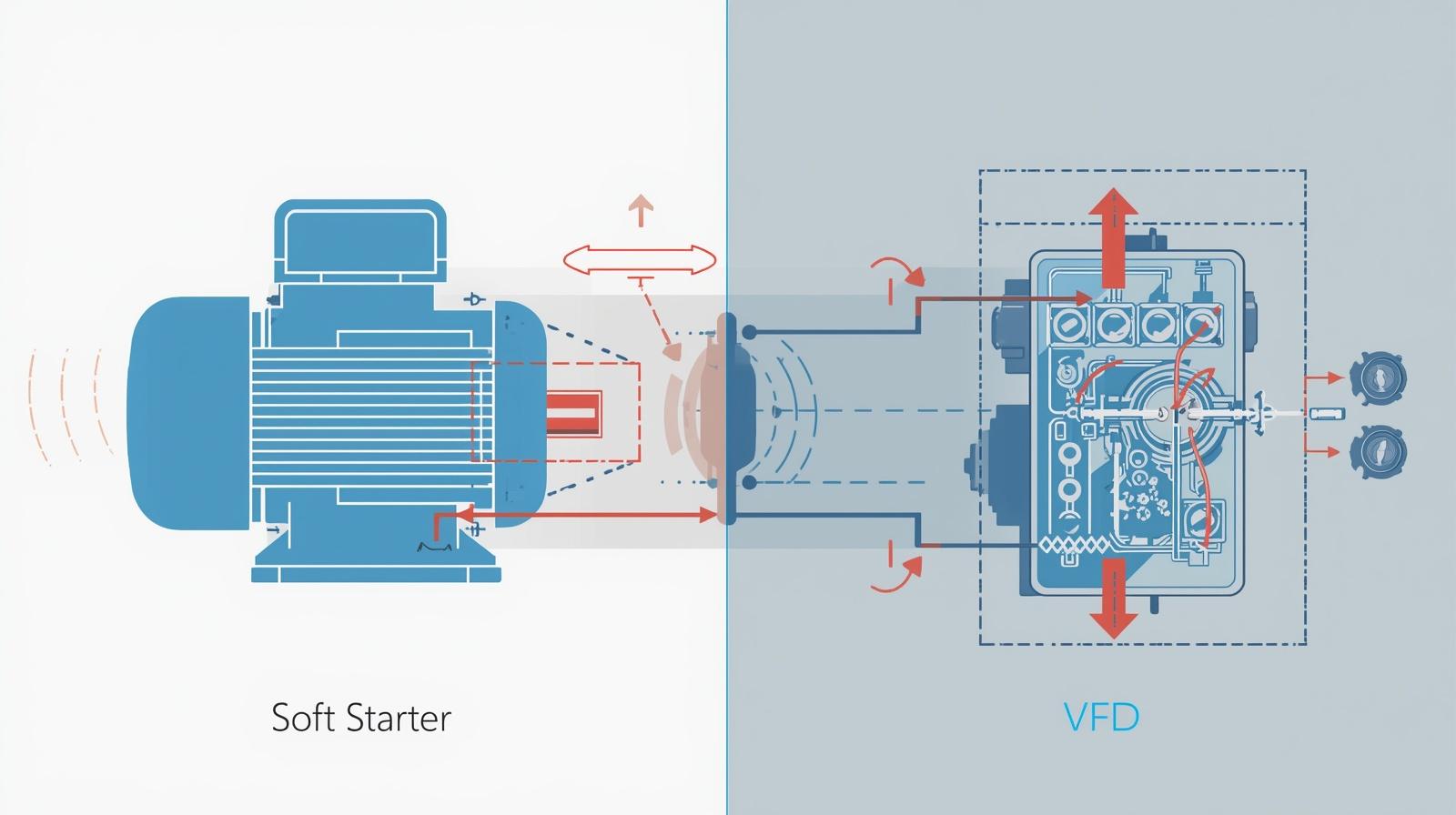
Choosing between a soft starter and a VFD is one of the most common decisions when selecting motor control equipment. Both are used to improve motor starting compared with direct-on-line starting, but they do very different jobs. A soft starter is mainly designed to reduce inrush current and mechanical shock during start-up, while a VFD gives you full control over motor speed, acceleration and deceleration.
In this guide, we explain the real difference between soft starters and variable frequency drives, when each one makes sense, and which type of system is usually the better choice for pumps, fans, conveyors, compressors and general industrial machinery. We have also linked to relevant product categories across our range so you can move straight from the guide to the most suitable equipment.
If you want to browse the main product families first, you can view our full Inverter Drives range or our Soft Starts category.
Quick Navigation
- What is a soft starter?
- What is a VFD?
- Main difference between a soft starter and VFD
- When to use a soft starter
- When to use a VFD
- Soft starter vs VFD by application
- Advantages and disadvantages
- Recommended drive categories
- Final verdict
What Is a Soft Starter?
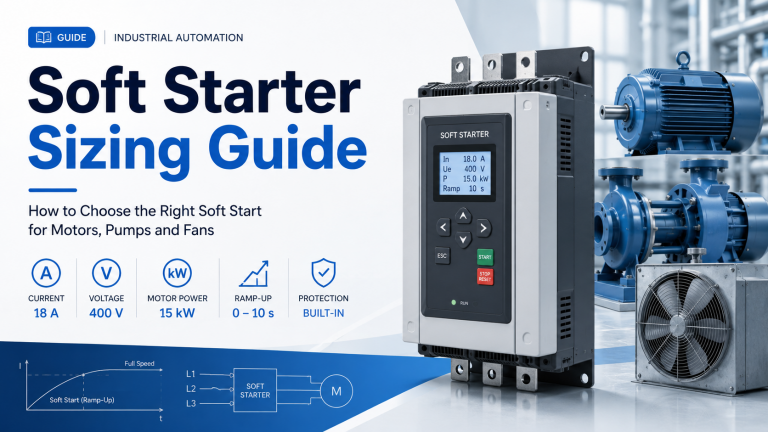
A soft starter controls how much voltage is applied to the motor during start-up. Instead of hitting the motor with full voltage instantly, it ramps the voltage up gradually. This reduces mechanical stress on belts, couplings, gearboxes and driven equipment, while also lowering electrical inrush current compared with direct-on-line starting.
Once the motor reaches full speed, a soft starter has effectively done its main job. It does not normally control motor speed during continuous operation in the same way a VFD does.
Soft starters are commonly used where the goal is simply to start and stop a motor more smoothly, especially on equipment such as:
- Pumps
- Fans
- Compressors
- Conveyors
- Simple process machinery
If your application only needs a controlled start and stop, and the motor runs at full speed most of the time, a soft starter can often be the more straightforward option.
What Is a VFD?
A VFD, also called an inverter drive or variable frequency drive, controls both the voltage and frequency supplied to the motor. This means it can do much more than just soften the start. A VFD allows you to control:
- Motor speed
- Acceleration and deceleration rates
- Torque behaviour
- Process control functions
- Energy use in variable load applications
That is why VFDs are widely used where speed control, process flexibility or energy efficiency matter. If you are comparing drive families, start with our main Inverter Drives category and then narrow down into the right brand or series.
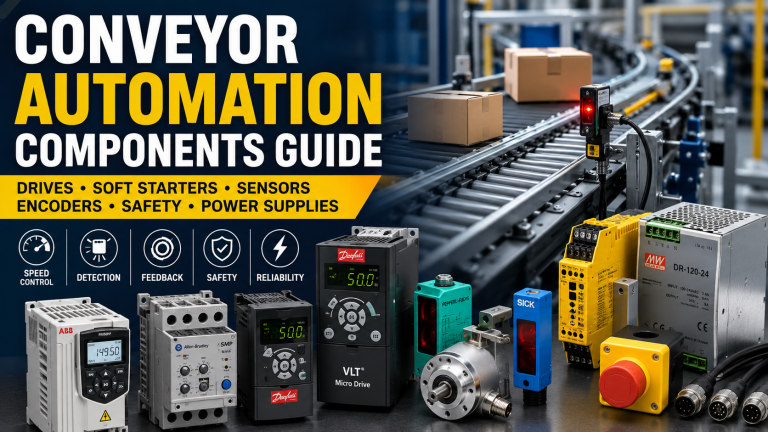
Popular options across our range include Allen Bradley PowerFlex 525 Inverters, Danfoss VLT Micro Drive, Schneider ATV320 Inverter Drives, Siemens SINAMICS V20 Inverter Drives and Delta MS300 Series Inverters.
Main Difference Between a Soft Starter and VFD
The simplest way to think about it is this:
- Soft starter: mainly improves how the motor starts and stops
- VFD: controls how the motor starts, runs and stops
A soft starter is a better fit when the motor only needs help during starting. A VFD is the better fit when you need speed control, varying process output, adjustable ramping, lower energy use in variable torque applications, or more advanced protection and communications.
If your application always runs at one fixed speed and you just want to reduce startup stress, a soft starter can make sense. If you need the motor speed to change during operation, a soft starter will not do that job. In those cases, you need a VFD.
When Should You Use a Soft Starter?
A soft starter is usually the right choice when:
- The motor runs at full speed once started
- You want to reduce inrush current
- You want to reduce mechanical shock on startup
- You need a simpler and often lower-cost solution than a VFD
- You do not need variable speed control
Typical examples include:
- Pumps where smooth startup helps avoid pressure shock
- Fans that normally run at one operating speed
- Compressors that benefit from reduced starting stress
- Conveyors where controlled startup is needed but speed is fixed
For fixed-speed motor starting, especially on larger motors where startup current is a concern, soft starters remain a very practical solution.
When Should You Use a VFD?
A VFD is usually the better option when:
- You need variable speed control
- You want better process control
- You want adjustable acceleration and deceleration
- You want energy savings on pumps and fans
- You need advanced motor protection or communications
- You need different operating speeds for different product runs or process conditions
Applications where VFDs are often the better choice include:
- Conveyors with speed adjustment
- Pumps with demand-based flow control
- Fans where speed is varied for energy saving
- Mixers that need ramp control
- Packaging lines where speed and timing matter
For general-purpose use, many buyers start with Allen Bradley PowerFlex 525, Schneider ATV320 or Siemens SINAMICS V20.
Soft Starter vs VFD by Application
Pumps
For simple fixed-speed pumping applications, a soft starter may be enough. If you need variable flow or energy savings, a VFD is usually the better option.
Fans
Soft starter for fixed speed. VFD for adjustable airflow and efficiency.
Conveyors
Soft starter for simple systems. VFD where speed control is needed.
HVAC Systems
VFDs are typically the best option for demand-based control and energy savings.
Advantages and Disadvantages
Soft Starter
- Simple and cost-effective
- Reduces startup stress
- No speed control
VFD
- Full speed control
- Improved efficiency
- More advanced functionality
Recommended Categories to Compare
Final Verdict: Soft Starter or VFD?
Choose a soft starter if you need smoother startup and fixed speed operation.
Choose a VFD if you need speed control, efficiency and flexibility.
Browse our Inverter Drives or Soft Starts to find the right solution.