VFD for Single-Phase Motors: Can You Use an Inverter Drive on a Single-Phase Motor?
One of the most common questions people ask when trying to control motor speed is whether they can use an inverter drive, also known as a VFD, on a single-phase motor. The simple answer is: sometimes, but not always. It depends on the motor type, the power supply available, the drive output, and whether the motor is designed to be speed controlled.
A VFD is most commonly used to control the speed of a three-phase AC motor. However, many workshops, farms, small factories and domestic-style premises only have a single-phase electrical supply available. This often leads people to ask whether they can use a single-phase input inverter drive to run a motor, or whether they can control an existing single-phase motor directly.
This guide explains the difference between single-phase input drives, three-phase output drives, and true single-phase motor control, so you can avoid choosing the wrong inverter drive for your application.
Can You Use a VFD on a Single-Phase Motor?
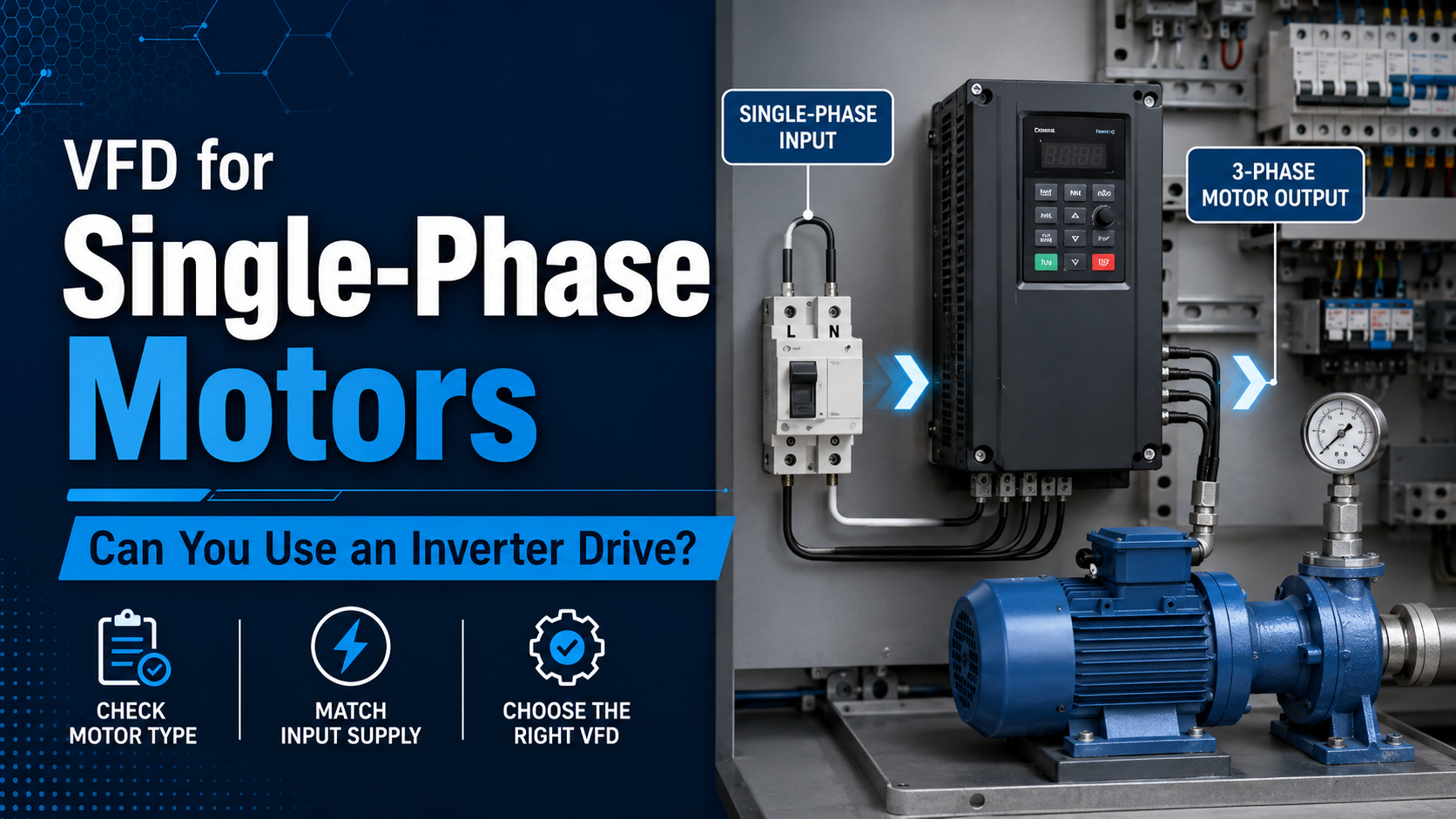
In most industrial applications, a standard VFD is not used to control a standard single-phase motor directly. Most inverter drives are designed to output three-phase power to a three-phase motor, even if the drive itself is powered from a single-phase input supply.
This is an important difference:
- Single-phase input VFD: The drive is powered from a single-phase supply.
- Three-phase output VFD: The drive outputs three-phase power to the motor.
- Single-phase motor: A motor designed to run from a single-phase supply, often with a capacitor.
So, when someone says “single-phase VFD”, they usually mean a drive that takes single-phase input power and runs a three-phase motor. They do not usually mean a drive that controls a single-phase capacitor motor.
If you have a single-phase supply and want proper speed control, the best solution is usually to use a TEC 1PH Inverter Drive or another single-phase input VFD with a suitable three-phase motor.
Single-Phase Input VFD vs Single-Phase Output VFD
The most important thing to understand is the difference between the drive input and the drive output. These are not the same thing.
Single-Phase Input VFD
A single-phase input VFD is powered from a single-phase supply, usually 230V in the UK. The drive then creates a three-phase output for a three-phase motor. This is very useful when you only have single-phase power available but want to run a small three-phase motor with variable speed control.
Typical applications include:
- Small workshop machinery
- Fans and pumps
- Conveyors
- Mixers
- Machine tools
- Packaging equipment
- Light industrial motor control
Single-Phase Output VFD
A true single-phase output VFD is much less common. Standard industrial VFDs are generally not designed to run capacitor-start or capacitor-run single-phase motors. These motors often rely on start windings, run capacitors or centrifugal switches, which can cause problems when connected to a standard inverter drive.
For most industrial speed control jobs, it is better to replace the single-phase motor with a suitable three-phase motor and run it from a single-phase input inverter drive.
Why Standard VFDs Are Usually Designed for Three-Phase Motors
Three-phase motors are ideal for inverter drive control because they are simple, reliable and well suited to variable frequency operation. A VFD controls the motor speed by adjusting the frequency and voltage supplied to the motor.
A standard three-phase motor can usually run smoothly across a controlled speed range when correctly matched to the drive. A single-phase capacitor motor is different. It is not normally designed to receive a variable-frequency output from a standard VFD.
This is why most VFD installations use:
- Single-phase supply into the drive
- Three-phase output from the drive
- Three-phase motor connected to the drive
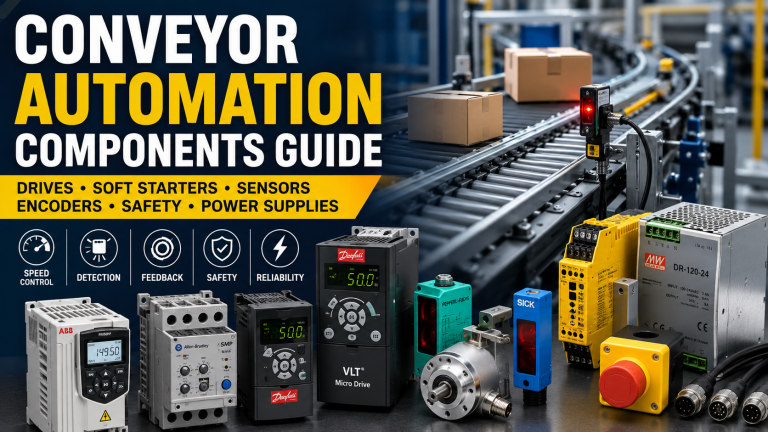
For small motor applications, compact options such as Danfoss VLT Micro Drive, Delta MS300 Series Inverters and ABB ACS355-01E Inverter Drives are commonly considered for lower-power motor control applications.
Can a Single-Phase Supply Run a Three-Phase Motor?
Yes, in many cases a single-phase supply can run a three-phase motor when the correct inverter drive is used. This is one of the biggest benefits of a single-phase input VFD.
For example, if you have a 230V single-phase supply, you can often use a 230V single-phase input inverter drive to run a suitable 230V three-phase motor. This is common on smaller machines where a three-phase supply is not available.
Example Setup
- Available supply: 230V single phase
- Drive input: 230V single phase
- Drive output: 230V three phase
- Motor required: 230V three-phase motor, usually wired in delta
This setup can provide smooth speed control, adjustable acceleration, adjustable deceleration, motor protection and improved control compared with simple direct-on-line starting.
Can You Connect a Standard Single-Phase Motor to a VFD?
In most cases, you should not connect a standard single-phase capacitor motor to a standard three-phase output VFD. The drive is designed to create a balanced three-phase output, not to operate the start and run windings of a single-phase motor.
Problems can include:
- The motor failing to start correctly
- Excessive current draw
- Capacitor failure
- Poor torque at low speed
- Motor overheating
- Drive faults
- Unstable running
Some specialist drives are designed for certain single-phase motor applications, but these should not be confused with standard industrial inverter drives. If you want reliable variable speed control, a three-phase motor and correctly matched inverter drive is usually the better engineering solution.
What Specs Must You Check Before Choosing a Single-Phase Input VFD?
Before choosing a VFD for a single-phase supply, you need to check more than just the motor power rating. The drive must be compatible with the supply, the motor, the application and the required control method.
1. Input Voltage
Check that the drive accepts your available supply voltage. In the UK, smaller single-phase installations are commonly 230V. The drive must be rated for single-phase input if you only have a single-phase supply available.
2. Output Voltage
The output voltage must suit the motor. A 230V single-phase input VFD will normally output 230V three phase, so the motor must be suitable for 230V three-phase operation.
3. Motor Wiring
Many dual-voltage motors are marked 230/400V. When used with a 230V three-phase output VFD, the motor is usually wired in delta. Always check the motor nameplate and terminal box wiring before connecting the drive.
4. Motor Current
Do not select the drive by kW alone. The drive output current must meet or exceed the motor full load current. If the motor current is higher than the drive rating, the drive may trip or overheat.
5. Application Load
A fan or pump is usually easier to run than a conveyor, mixer, compressor or high-starting-torque machine. Heavier applications may require a larger drive or a drive with stronger overload capacity.
6. Control Method
Decide how the drive will be controlled. This may be via keypad, external start/stop buttons, potentiometer, 0–10V signal, 4–20mA signal, relay outputs or PLC communication.
For machinery and automation applications where control features are important, ranges such as Schneider ATV320 Inverter Drives, Siemens SINAMICS G120C Inverter Drives and Omron 3G3MX2-V2 Inverter Drives may be useful options to compare.
When Is a Single-Phase Input VFD a Good Choice?
A single-phase input VFD is a good choice when you only have a single-phase supply available but need proper speed control of a three-phase motor. It is especially useful for smaller machines and lower-power motor applications.
A single-phase input VFD can be suitable for:
- Small conveyors
- Workshop machines
- Fans
- Pumps
- Light mixers
- Small packaging machines
- Variable speed machinery
- Test rigs
It can also be a practical solution where upgrading the building to a full three-phase supply would be too expensive or unnecessary.
When Is a Single-Phase Input VFD Not Suitable?
A single-phase input VFD is not the right choice for every job. It may not be suitable if the motor is too large, the load is very heavy, the machine requires high starting torque, or the existing motor is a standard single-phase capacitor motor that cannot be replaced.
It may not be suitable when:
- You need to run a large motor from a small single-phase supply
- The supply cannot handle the required current
- The motor is a standard single-phase capacitor motor
- The application has very high starting torque
- The machine requires rapid stopping without suitable braking equipment
- The motor cannot be rewired or replaced
If the application needs fast stopping or controlled deceleration, you may also need to check whether a braking resistor is required. You can browse our Braking Resistors category for related components.
Do You Need to Derate a VFD on Single-Phase Input?
Some inverter drives are specifically designed and rated for single-phase input. Others may allow single-phase input but require derating. Derating means the drive cannot be used at its full normal output rating when powered from single phase.
This is why it is important to check the drive datasheet before ordering. Do not assume that every 230V drive can be powered from single phase. Some drives are three-phase input only, even if the voltage looks similar.
Check the datasheet for:
- Single-phase input approval
- Input current rating
- Output current rating
- Derating requirements
- Maximum motor size on single-phase input
- Recommended fuses or circuit protection
If you are unsure, choose a drive category that is clearly intended for single-phase input, such as TEC 1PH Inverter Drives.
What About 230V Single Phase In and 400V Three Phase Out?
A standard 230V single-phase input VFD normally outputs 230V three phase, not 400V three phase. This means the motor must be suitable for 230V three-phase operation.
If you need 400V three-phase output from a 230V single-phase supply, that usually requires a different type of solution, such as a phase converter or voltage-boosting drive system. This is not the same as a normal single-phase input inverter drive.
For most small machinery, the more practical solution is to use a dual-voltage 230/400V motor wired correctly for the drive output.
Can a VFD Run a Single-Phase Motor Without a Capacitor?
Some people ask whether removing the capacitor from a single-phase motor makes it suitable for VFD control. In most standard cases, this is not recommended unless the motor and drive combination has been specifically designed for that type of operation.
A single-phase motor is built differently from a three-phase motor. Removing or bypassing components can reduce starting torque, create overheating problems and make the motor unreliable. For proper variable speed control, a three-phase motor is generally the safer and more reliable choice.
VFD Wiring Considerations for Single-Phase Supply Applications
When installing a single-phase input VFD, the wiring must be completed correctly. The incoming single-phase supply is connected to the correct input terminals, while the motor is connected to the drive’s three-phase output terminals.
You should also check whether the installation requires screened motor cable, correct earthing, EMC filtering, external controls, fusing and suitable isolation.
Important wiring checks include:
- Correct input terminals for single-phase supply
- Correct output terminals to the motor
- No contactor switching between the drive and motor during operation
- Correct motor earth connection
- Screened motor cable where required
- Correct control wiring for start, stop and speed reference
- Suitable overload and short-circuit protection
For supporting installation parts, you may also want to review our Cables and Filters categories.
Common Mistakes When Choosing a VFD for Single-Phase Motors
Many VFD problems happen because the wrong type of drive or motor has been selected. Before buying a drive, avoid these common mistakes:
- Assuming “single-phase VFD” means single-phase motor output: Most single-phase input drives output three-phase power.
- Connecting a capacitor motor to a standard VFD: This can cause faults, overheating and motor damage.
- Only matching the kW rating: Always check the motor current as well.
- Ignoring motor voltage: The motor must suit the drive output voltage.
- Forgetting about derating: Some drives must be oversized when used on single-phase input.
- Using the wrong motor wiring: A 230/400V motor may need to be wired in delta for 230V three-phase output.
- Ignoring braking needs: Fast stopping applications may need a braking resistor.
- Not checking control wiring: External controls must be compatible with the new drive.
Best Product Categories to Check
If you are choosing a VFD for a single-phase supply, or replacing a small motor drive, these categories are good starting points:
- TEC 1PH Inverter Drives – useful for single-phase input applications and smaller motor control setups.
- Danfoss VLT Micro Drive – compact option for smaller motors and simple speed control applications.
- Delta MS300 Series Inverters – compact drives for machine control, panels and general automation.
- ABB ACS355-01E Inverter Drives – suitable for compact machinery and general-purpose motor control.
- Schneider ATV320 Inverter Drives – useful for OEM machine control and compact automation systems.
- Siemens SINAMICS G120C Inverter Drives – good for Siemens-based control panels and industrial applications.
- Omron 3G3MX2-V2 Inverter Drives – compact drive option for machinery and automation.
- Braking Resistors – useful when the motor needs fast stopping or controlled deceleration.
- Filters – important for reducing electrical noise and supporting reliable VFD installations.
- Cables – suitable for motor cable, control cable and replacement wiring requirements.
Final Answer: Should You Use a VFD on a Single-Phase Motor?
If you have a single-phase power supply, you can often use a single-phase input VFD to run a suitable three-phase motor. This is one of the most practical ways to get variable speed control where only single-phase power is available.
However, using a standard VFD directly on a standard single-phase capacitor motor is usually not recommended. Most industrial VFDs are designed for three-phase motor output, not single-phase motor output.
The best approach is usually:
- Use a single-phase input inverter drive if only single-phase supply is available.
- Connect it to a correctly rated three-phase motor.
- Check motor voltage, current, wiring and application load before buying.
- Use the correct cables, filters and braking components where required.
At Drive Outlet Megastore, we supply a wide range of inverter drives, braking resistors, filters, cables and automation components for industrial motor control applications. Whether you are upgrading a small machine, replacing an old drive or trying to run a three-phase motor from a single-phase supply, choosing the correct VFD specification first is the key to reliable operation.